
What Is Ethical Sourcing, and How Can You Tell a Company Is Doing It?
A plain definition of ethical sourcing, what it covers, and what I learned at Starbucks when C.A.F.E. Practices launched.
7 min read
Most companies have a responsible sourcing policy. Far fewer can show that it works.
Ask a company whether it sources responsibly and the answer is almost always yes. Ask to see how it knows, and the conversation gets shorter.
A policy says what a company expects of its suppliers. A program finds out whether suppliers meet it, fixes what falls short and reports the results.
I served as senior vice president of corporate responsibility at Starbucks from 2003 to 2008, where I led the creation of C.A.F.E. Practices, the company code of conduct for coffee farmers.[1] Since 2008 I have advised companies on their own sourcing programs at Sustainable Business International. I have also sat on the boards of two companies that buy high-risk crops: D.E. Master Blenders 1753, the international coffee and tea company, from 2012 to 2013,[1] and Rocky Mountain Chocolate Factory, which I joined in October 2021.[8]
A responsible sourcing program is the set of policies, checks and supplier relationships a company uses to make sure the goods it buys are produced without harm to workers, communities or the environment, and to prove it.
It usually covers labor rights, health and safety, environmental impact and business integrity.
The three terms are often used as if they mean the same thing. They work better as three layers.
Responsible sourcing policy. The written standard. It states what you expect of suppliers and what you will not accept.
Responsible sourcing strategy. Your choices about where to focus. Which materials, which countries and which risks come first, and what you will spend to address them.
Responsible sourcing program. The day-to-day work that puts the policy and strategy into practice: supplier mapping, verification, corrective action, training and reporting.
That is the most common gap I see at Starbucks, the first strategic choice was coffee, the product the whole business depends on. C.A.F.E. Practices launched in 2004, and by 2012, 90 percent of Starbucks coffee was verified against it.[9] Tea and cocoa now have their own sourcing standards. In fiscal 2025, 99.15 percent of the coffee came from farms and supply chains that meet C.A.F.E. Practices. The company also bought 2,848 metric tons of Rainforest Alliance Certified tea and 23,927 metric tons of certified cocoa.[10] Starting with the material that matters most made the program possible to manage, and it gave us results we could report before we took on anything else.
The ILO and UNICEF estimate that about 138 million children were in child labor in 2024, around 54 million of them in hazardous work. Agriculture accounts for 61 percent of all cases.[2] If you buy crops, or products made from them, this applies to you.
The OECD Due Diligence Guidance for Responsible Business Conduct, published in 2018, sets out six steps:
Embed responsible conduct in policies and management systems
Identify and assess harms
Stop and prevent them
Track results,
Communicate
Provide for remedy[3]
The EU Corporate Sustainability Due Diligence Directive, as amended in 2026, will apply from July 2029 to EU companies with at least 5,000 employees and EUR 1.5 billion in worldwide net turnover, and to non-EU companies with EUR 1.5 billion in net turnover in the EU.[5] Most companies sit well below those thresholds. Many of them supply companies that sit above them.
The third reason is supply. A program that keeps farmers and factories viable protects the materials a business needs for decades. I wrote about that long-term logic in my post on why patient investment tends to win.
The steps below follow the OECD sequence, with lessons from C.A.F.E. Practices and from the companies I have advised since.
The UN Guiding Principles say a company’s human rights policy should be approved at the most senior level of the business.[4] Responsible sourcing will at some point cost money or end a supplier relationship. If the CEO and board have not agreed to that in advance, the first hard decision will undo the program.
Name an executive owner and give the program a budget. Bring procurement, sustainability, legal and the business units into the work from the first meeting.
Start with your direct suppliers, then trace each important material back as far as you can: to the farm, mine, mill or factory.
Then rank. The OECD guidance is explicit that due diligence is risk-based. Focus first where harm is most likely and most severe. A company that buys cocoa has different priorities from one that buys office furniture.
Pick one or two materials to start with. For a coffee company, that is coffee. In wine, the industry I wrote about in The Business of Sustainable Wine, it may be grapes bought from outside growers.
Your policy should be short enough for a supplier to read and specific enough to check. At minimum it should cover:
Wages and benefits, working hours and health and safety
Forced labor and child labor
Freedom of association
Environmental protection, including land, water and chemicals
Bribery and business integrity
What happens when a supplier falls short
The most useful design choice I know is to separate absolute requirements from improvement goals. C.A.F.E. Practices measures suppliers against more than 200 indicators, and a small set are zero-tolerance, including any form of child labor, conversion of natural forest to farmland since 2004 and the use of prohibited pesticides.[6] Everything else is scored, so suppliers can see where they stand and how to improve.
Supplier questionnaires are a reasonable first step. Most of the risk shows up only when someone independent goes and looks.
At Starbucks we built C.A.F.E. Practices as a verification program rather than a one-time certificate. Approved third-party organizations inspect farms, mills and warehouses, and suppliers are reverified on a schedule tied to their performance.[6] SCS Global Services oversees the quality of that verification.[7]
A smaller company can work at a smaller scale, with at least one independent check built in, whether that is a recognized certification, a shared industry audit or periodic visits by someone who does not report to the buying team.
The OECD guidance asks companies to stop, prevent and mitigate harm, and to provide for remedy when they have caused or contributed to it.[3]
In practice that means a corrective action plan with deadlines, support to meet them and a clear point at which you stop buying. Ending the relationship should come last. A supplier you drop may simply sell to a buyer who asks fewer questions, and the workers are no better off.
Suppliers respond to what buyers pay for. Starbucks pays premiums above the commercial market price, with additional premiums for supply chains that reach the highest performance level and keep improving.[6]
Look at your own purchasing practices too. If buyers are rewarded only for the lowest price and the fastest delivery, they will push hardest on the suppliers your policy is meant to protect. Add sourcing performance to how buyers and suppliers are measured.
Set a small number of measures and report them every year, including the ones that look bad. A report with only good news reads as marketing, and readers can tell.
Then review the program itself. C.A.F.E. Practices launched in 2004. Two decades later it is still changing: a new version of the standard introduced a tiered approach, with the first tier launching in 2025.[7]
In my experience, the same four come up again and again.
Publishing a policy and stopping there. Without verification, a policy is a statement of intent.
Treating audits as the program. Audits find problems. Solving them takes supplier support and changes to how you buy.
Trying to cover everything at once. A program that covers every material lightly protects no one well.
Leaving procurement out. If the people who place orders do not own the goals, the program will lose every trade-off against price.
A responsible sourcing policy states your standards, and a program checks that suppliers meet them.
Get senior commitment and a named owner before you start.
Map your supply chain and focus on the highest risks first.
Separate zero-tolerance rules from improvement goals.
Verify independently, fix problems with suppliers and reward improvement.
Report results every year, including the poor ones, and keep revising.
A first-year program can be small: one material, a clear standard, an independent check and the commitment to act on what you find. Then add the next material.
You can read more about my background and career. For companies building or reviewing a sourcing program, this is the work we do at Sustainable Business International: sustainablebizintl.com/approach
I also speak with leadership teams, industry associations and conferences about what responsible sourcing looks like in practice. If that would help your audience, get in touch about a keynote or workshop.
If your largest customer asked tomorrow how you know your suppliers meet your standards, what would you show them?
ILO: Despite progress, child labour still affects 138 million children globally, June 11, 2025
OECD: Due Diligence Guidance for Responsible Business Conduct, 2018
UN OHCHR: Guiding Principles on Business and Human Rights, 2011
Starbucks: C.A.F.E. Practices, Starbucks Approach to Ethically Sourcing Coffee, February 28, 2024
SCS Global Services: Starbucks C.A.F.E. Practices Verification
Rocky Mountain Chocolate Factory: Form 10-K/A, fiscal 2022, U.S. SEC
Starbucks: Fiscal 2025 Global Impact Report, Data Tables, July 2026
Buying goods and materials in a way that avoids harm to workers, communities and the environment, and being able to show it through a written standard, independent checks and regular reporting.
Clear standards on wages, working hours, health and safety, forced and child labor, freedom of association, environmental protection and business integrity. It should also say how compliance is checked and what happens when a supplier falls short.
The terms overlap. Ethical sourcing usually puts people first, while responsible sourcing is often used as the broader term covering both people and the environment. The strongest programs cover both, whatever name they go by.
Some laws now require it for specific companies or risks. The EU Corporate Sustainability Due Diligence Directive will apply from July 2029 to the largest companies operating in the EU. Requirements vary by market, so companies should check the rules that apply to them.
A first version focused on one or two high-risk materials can be in place within a year. A mature program takes much longer. C.A.F.E. Practices launched in 2004 and was still being revised two decades later.
A plain definition of ethical sourcing, what it covers, and what I learned at Starbucks when C.A.F.E. Practices launched.
7 min read
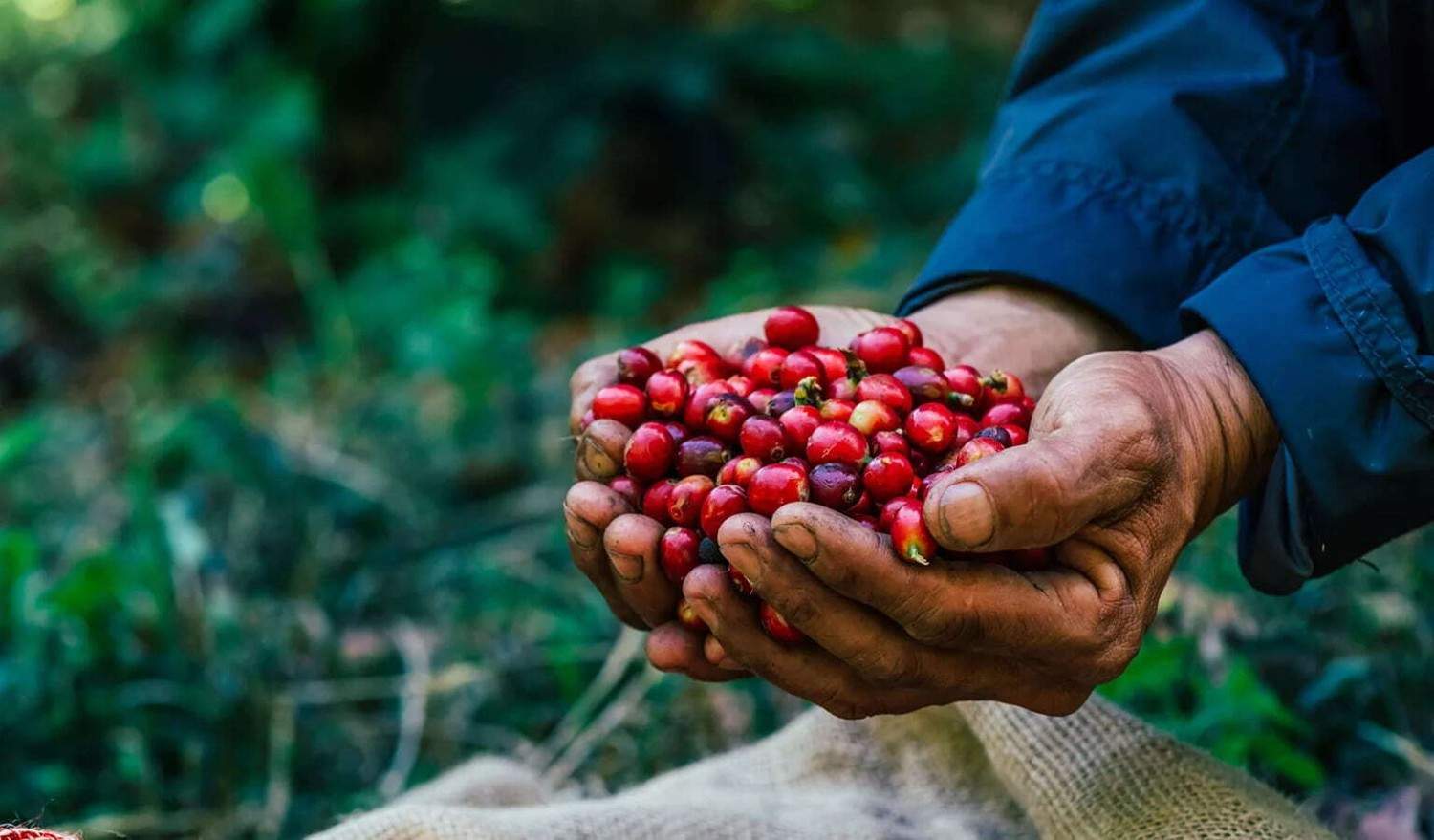
About half the land that grows arabica coffee today may not be able to grow it by 2050.
8 min read
Coffee, cocoa and wine companies have each tried a different way to keep their farms producing, and the results are now measurable.
9 min read