
What Is Ethical Sourcing, and How Can You Tell a Company Is Doing It?
A plain definition of ethical sourcing, what it covers, and what I learned at Starbucks when C.A.F.E. Practices launched.
7 min read
About half the land that grows arabica coffee today may not be able to grow it by 2050.
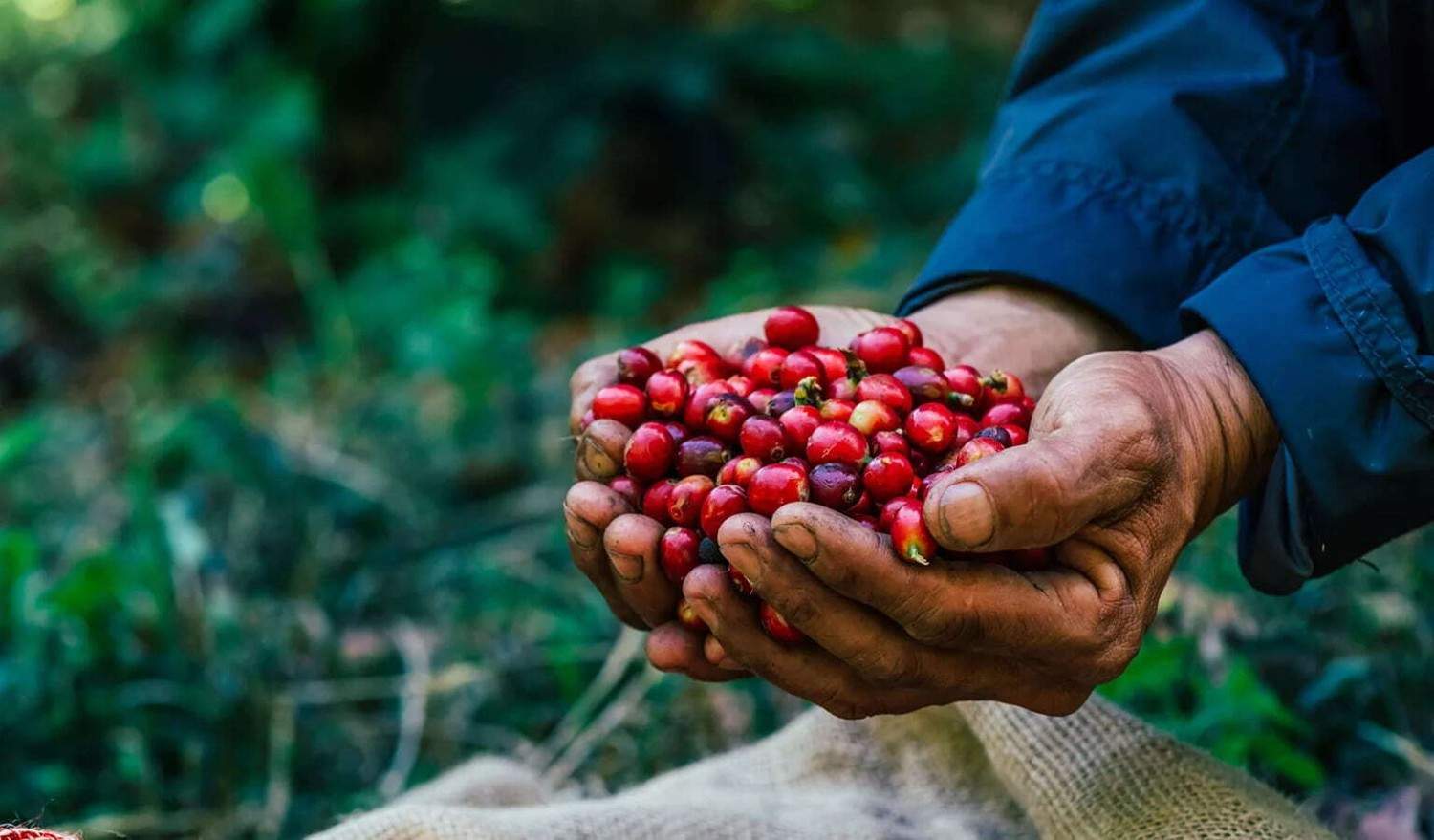
Up to 25 million farmers and their families depend on coffee for a living, and as many as 80 percent of the world's coffee farms are smallholdings, according to the UN Food and Agriculture Organization.[1] Whether a cup of coffee is sustainable is decided mostly on those small farms, long before the beans reach a roaster.
I was Starbucks' senior vice president of corporate responsibility from 2003 to 2008, and I led the development of C.A.F.E. Practices, the company's coffee sourcing standard.[2] I later sat on the board of D.E. Master Blenders 1753, a coffee company based in Amsterdam.[2]
Sustainable coffee is coffee grown on farms that can keep producing it for decades, run by farmers who earn enough to stay in coffee, without clearing forest or wearing out the soil and water around them.
Ethical coffee sourcing is the buyer's part where buyers know which farms the coffee came from, setting a standard for how it is grown and checking that the standard is met. I explained how ethical sourcing works for any raw material in my post on what ethical sourcing means.
Most public discussion of coffee sustainability is about forests and carbon. In my experience farm income deserves the same attention. A family that cannot cover its costs will cut corners on the farm, sell the land or move out of coffee, and no environmental standard will hold once that happens.
Arabica accounts for about 60 percent of the world's coffee.[1] A 2015 study by World Coffee Research, published in PLOS ONE, projected that about half the land suitable for arabica today will no longer be suitable by 2050. It also found that the median elevation of suitable land will rise by more than 300 meters, and that nearly all the coffee area in Brazil's hot, dry regions could become unsuitable.[3] Brazil and Vietnam together grow nearly half the world's coffee.[1]
When suitable land moves uphill, farmers follow it, and the land above many coffee farms today is forest. That is why I see climate and deforestation as one problem for coffee buyers.
Buyers have already paid for tight supply. In February 2025 the International Coffee Organization's composite price averaged 354.32 US cents a pound, the highest monthly average on record. The previous record, 305.13 cents, was set in March 1977.[4]
Some companies are investing ahead of these changes. In 2013 Starbucks bought Hacienda Alsacia, a farm in Costa Rica, and made it a research center for coffee varieties that resist disease and handle new growing conditions. I wrote about that decision in my post on companies that invest before they have to.
Wine grapes have the same problem. Like arabica, they grow well in a narrow band of temperatures, and growers are already testing new varieties and higher sites. My 2020 column on how wineries are adapting to climate change is in my journal.
Many cannot earn a living from coffee alone. A 2025 study by the International Food Policy Research Institute surveyed coffee smallholders in Nyeri and Murang'a counties in central Kenya. They earned an average of 109 Kenyan shillings a day, 35 percent of the 312 shillings the researchers set as a living income, and more than 90 percent of households fell below that benchmark. Even if prices and yields both doubled and non-coffee income rose by half, about two-thirds of households would still fall short.[5]
In 2023 Fairtrade International raised its minimum price for washed arabica from $1.40 to $1.80 a pound, for contracts signed from August 1 that year.[6] A floor protects farmers when market prices fall. It does not raise yields or lower costs, which is why I put as much weight on agronomy support as on price.
Shade is the clearest example. Many farmers grow coffee beneath taller trees. The Smithsonian Migratory Bird Center reviewed more than 50 studies of shade-grown and sun-grown coffee. In one study from Nicaragua, sun-grown coffee lost more than 2.5 times as much soil to erosion as shade-grown coffee on the same hillsides. In Chiapas, Mexico, coffee farms supported 180 bird species, 46 of them migratory.[7]
C.A.F.E. Practices has had zero tolerance since 2004 for converting natural forest to farmland and for using prohibited pesticides, and it asks farms to protect water and conserve energy.[8]
Standards alone do not change how a farm runs. Starbucks opened its first Farmer Support Center in Costa Rica in 2004, the year C.A.F.E. Practices launched, so that agronomists could work with farmers directly. Later centers opened in Rwanda, Tanzania, Colombia and China.[9]
At least 34 percent of the coffee produced in 2016 met a voluntary sustainability standard, according to the International Institute for Sustainable Development. Supply of that coffee was larger than demand for it.[10] A farmer can do the work to qualify and still not be paid for it.
The labels measure different things. Fairtrade sets a minimum price and a premium that farmer organizations invest. Organic certification covers what goes on the soil and the plant. Smithsonian Bird Friendly coffee must be certified organic and grown under shade that provides bird habitat.[11] Company programs such as C.A.F.E. Practices check a buyer's own standard across many farms.
I read a label as evidence that a farm met a standard on the day it was checked. I still ask what the farmer was paid and what support the farm gets.
C.A.F.E. Practices was developed with Conservation International and launched in 2004. It has more than 200 indicators covering economic transparency, social responsibility, environmental leadership and coffee quality. Third-party verifiers inspect farms, mills and warehouses, and SCS Global Services oversees the verifiers. Supply chains that reach the highest level earn additional premiums.[8]
In 2008 Starbucks set a goal of buying all its coffee through C.A.F.E. Practices, Fairtrade or another externally audited system by 2015. In 2015 the company announced that 99 percent of the coffee it had bought the previous year was ethically sourced.[12] The program had run for four years before that goal was set, and it took seven more to reach it.
These are the questions I would ask a coffee supplier:
Can you name the farms or cooperatives, and where they are? From December 30, 2026, large companies placing coffee on the EU market must show that it was not grown on land deforested after December 31, 2020.[13] They need the geolocation of each plot to do it.[14] A supplier that sells into Europe will need this data anyway.
Which standard applies, and is it published? A written standard lets you compare what a supplier promises with what an audit finds.
Who verifies it, and how often? Independent checks on a regular cycle count for more than a supplier's own assessment.
What do farmers receive, and does it cover their costs? Ask for the price paid at the farm or cooperative as well as the price you pay.
What support do farms get? Agronomy advice, credit and new plant varieties help farms meet a standard. Audits only record whether they did.
Up to 25 million farming families depend on coffee, and most coffee farms are smallholdings.
About half the land suitable for arabica today may be unsuitable by 2050.
Coffee smallholders in central Kenya earn about 35 percent of a living income.
Shade-grown farms lose less soil and support more birds than sun-grown farms.
More coffee meets a sustainability standard than buyers purchase as certified.
The EU deforestation rules apply to large companies from December 30, 2026.
Starbucks took from 2004 to 2015 to verify 99 percent of its coffee as ethically sourced.
Start with the origins you buy the most coffee from and the suppliers who can already trace it to the farm. Collect farm locations first, because the EU rules require them and every other check depends on knowing where the coffee was grown.
I advise food and beverage companies on sourcing programs like this, starting with an assessment of the issues that matter most in their supply chain. You can read how I work on my approach page. I also give keynotes on what building C.A.F.E. Practices taught me about sourcing, and event organizers can reach me through my contact page.
International Coffee Organization: Coffee Market Report, February 2025
Fairtrade International: Fairtrade increases coffee Minimum Price, March 30, 2023
Starbucks: C.A.F.E. Practices, Starbucks Approach to Ethically Sourcing Coffee, February 28, 2024
Smithsonian Migratory Bird Center: Ecological benefits of shade-grown coffee
Daily Coffee News: Starbucks claims 99% ethically sourced coffee, May 15, 2015
Coffee grown on farms that can keep producing for decades, by farmers who earn enough to stay in coffee, without clearing forest or degrading soil and water.
A buyer's program for knowing which farms its coffee comes from, setting a written standard for how it is grown and paying for independent checks that the standard is met.
No. Organic certification covers pesticides and fertilizers. It does not set a price for the farmer or require shade trees.
Higher temperatures and changing rainfall reduce the land suitable for arabica. A 2015 study projected the loss of about half of that land by 2050, with suitable areas moving more than 300 meters higher.
Yes. From December 30, 2026, large companies placing coffee on the EU market must show it was not grown on land deforested after December 31, 2020. Small and micro enterprises have until June 30, 2027.
A plain definition of ethical sourcing, what it covers, and what I learned at Starbucks when C.A.F.E. Practices launched.
7 min read
Coffee, cocoa and wine companies have each tried a different way to keep their farms producing, and the results are now measurable.
9 min read
Levi Strauss wrote the first one in 1991. Here is what I look for in a supplier code, four examples I point people to and a template you can adapt.
8 min read