What Is Ethical Sourcing, and How Can You Tell a Company Is Doing It?
A plain definition of ethical sourcing, what it covers, and what I learned at Starbucks when C.A.F.E. Practices launched.
7 min read
Coffee, cocoa and wine companies have each tried a different way to keep their farms producing, and the results are now measurable.
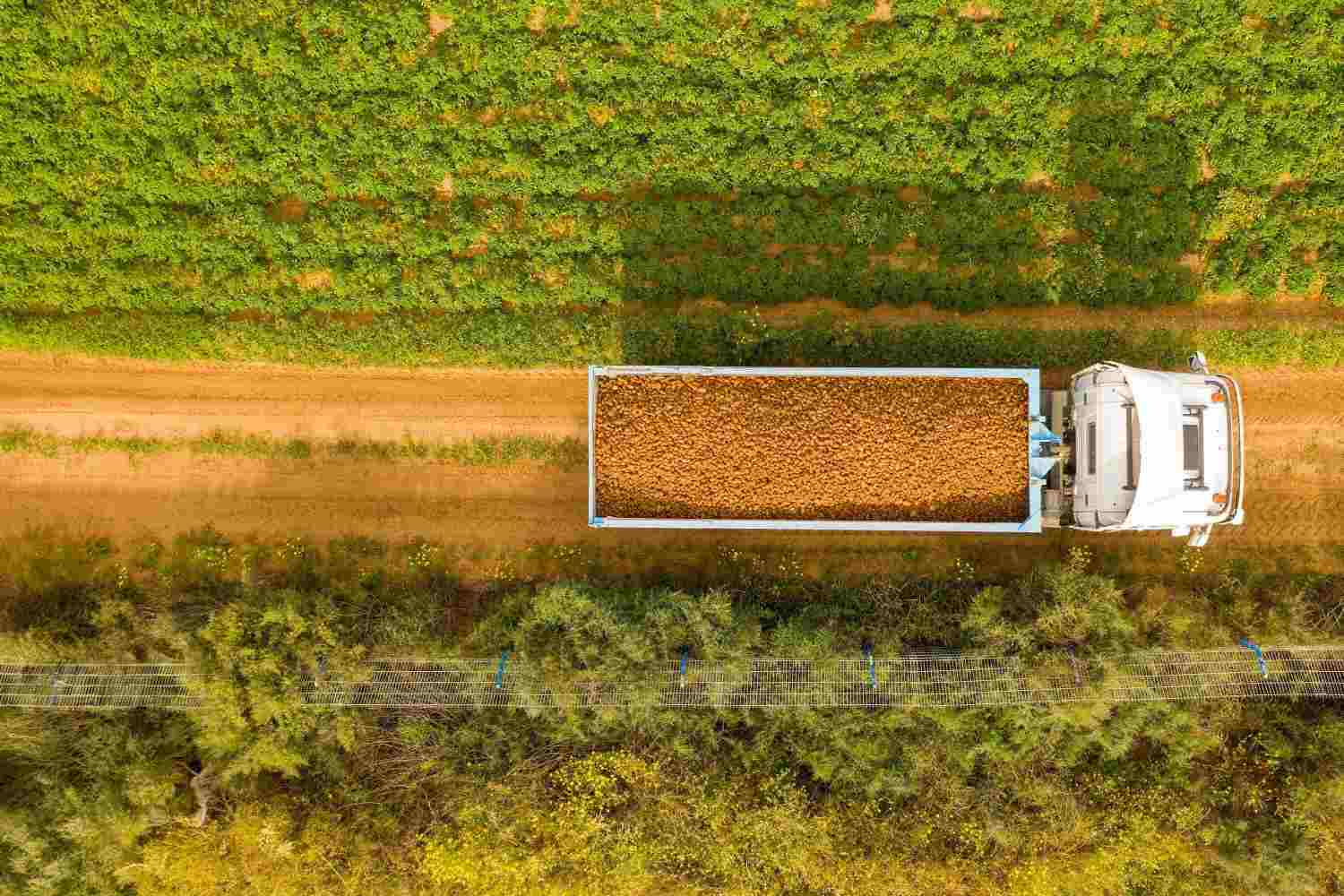
In 2015 the world's food system produced about 18 billion tonnes of greenhouse gases, roughly a third of all emissions caused by people. About two-thirds of that came from farming and from clearing land for it.[1] For a company that sells coffee, chocolate or wine, most of its footprint sits on farms it does not own and may never have visited.
I was senior vice president of corporate responsibility at Starbucks from 2003 to 2008, and I led the work that created C.A.F.E. Practices, the Starbucks sourcing standard for coffee. Since 2008 I have advised food and beverage companies on their supply chains, and I have written two books about sustainability in wine. The three examples below are the ones I come back to most often when a client asks what a sustainable supply chain looks like in practice.
A sustainable supply chain means where a company knows where its raw materials come from and can show that the farms, workers and land producing them will be able to keep producing for decades.
In food and beverage, that covers greenhouse gas emissions, deforestation, water use, working conditions and the income farmers earn. Ethical sourcing, which I explained in my post on what ethical sourcing covers, deals mainly with the people in the chain. A sustainable supply chain also includes the land, the climate and whether the crop will still be there.
If a packaging supplier fails, a company can usually find another one. If arabica farms in a region stop producing because of heat or disease, there may be no other supply of the same quality to buy.
Most of the emissions sit with suppliers. Companies that reported to CDP in 2023 said their supply chain emissions were on average 26 times larger than the emissions from their own operations. Only 15 percent had set a target for those supply chain emissions, and only about four in ten worked with their suppliers on climate.[2]
In food, those suppliers are often small family farms, and there are a great many of them. California alone has about 5,900 winegrape growers.[3] The Nestlé cocoa income program works with 45,000 farming families.[4] A company can audit a bottling plant every year. It cannot send an auditor to every cocoa farm every year, so it needs other ways to know what is happening and to change it.
Starbucks launched C.A.F.E. Practices in 2004 with Conservation International. Third-party verifiers check farms, mills and warehouses against more than 200 indicators covering economic transparency, social responsibility, environmental leadership and coffee quality. SCS Global Services oversees the verifiers. Starbucks pays a premium above the market price for verified coffee, and a further premium to supply chains that reach the highest level.[5]
The standard told us which farms met our expectations. It could not protect a farm from coffee leaf rust or a hotter growing season. Starbucks added that work later. Its research farm in Costa Rica, Hacienda Alsacia, tests coffee varieties that hold up in difficult climates. In 2017 the company set a goal to donate 100 million trees grown from those varieties, and in March 2026 it reported reaching it. The trees went to farmers in El Salvador, Guatemala and Mexico. It plans to donate 50 million more, including to farms in Ethiopia, Rwanda, Tanzania and Colombia. In 2025 its Global Farmer Fund reached its goal of $100 million in financing for smallholder farmers.[6]
C.A.F.E. Practices required economic transparency, Starbucks knew which farms it bought from before it began investing in them. A company that funds tree planting or farmer loans without that information has no reliable way to show where the money went or what it changed.
Nestlé tested its income accelerator program with 1,000 cocoa-farming families in Côte d'Ivoire in 2020, expanded to 10,000 in 2022 and aims to reach about 160,000 families by 2030.[7]
The program pays families directly by mobile money when they meet set conditions. Under the rules introduced in 2025, a household earns €250 when one hectare of its cocoa is verified as pruned, and another €250 when its children aged 6 to 16 are verified as enrolled in school. The pruning payment goes to the farmer and the school payment to the farmer's partner. Households can earn up to €500 a year in the first two years and €250 a year after that.[7]
The KIT Institute evaluates the program independently. Its report published in June 2026 found that participating households produced an average of 2,116 kilograms of cocoa in the 2024/2025 season, about 500 kilograms more than similar households outside the program, and that their cocoa income rose 190 percent. The same report found that the program had not yet helped families earn significant income from anything other than cocoa.[4] Cocoa prices also rose during this period. An earlier Nestlé progress report said that rise accelerated the profit gains it measured in 2024.[8]
An audit can find a child working on a cocoa farm after the fact. A payment tied to school enrollment gives the family a reason to keep that child in school in the first place. I would like to see more companies test this approach and publish independent evaluations, including the weak results, as Nestlé has done.
California makes 81 percent of the wine produced in the United States.[3] By March 2025, 90 percent of California wine was made in a certified sustainable winery, up from 80 percent a year earlier. Only 65 percent of the state's vineyard acreage was certified.[9]
A winery controls its own building, energy use and water. Many of its grapes come from independent growers, and each grower's vineyard has to be certified separately.
Retail buyers have pushed this along. In 2018 I wrote that supermarket and liquor board buyers, including Tesco, Marks & Spencer, Whole Foods, Walmart, the SAQ in Quebec, the LCBO in Ontario and Systembolaget in Sweden, wanted a large share of the wine they stock to be sustainable, organic or biodynamic.[10] Wineries that could not show it risked losing those listings. I covered how wineries build this into their business in The Business of Sustainable Wine (2017), and what the labels mean for the people buying the bottles in my consumer guide, Vines and Values (2025).
From 30 December 2026, large and medium companies that place coffee, cocoa, palm oil, soy, cattle, rubber or wood on the EU market must show that the goods did not come from land deforested after 31 December 2020. They must give the location of the plot where the commodity was harvested. Micro and small companies follow on 30 June 2027.[11]
When we launched C.A.F.E. Practices in 2004, knowing which farms supplied your coffee was a choice a company made. For coffee and cocoa sold in Europe, knowing it down to the plot is now a legal requirement. Companies that have already mapped their farms are in a much better position than those starting this year.
Start with the one crop or ingredient that makes up the largest share of your supply chain emissions and that you would have the most trouble replacing. For a coffee roaster that is coffee. For a chocolate maker it is cocoa. For a winery that buys fruit, it is grapes.
Trace that crop as close to the farm as you can and record what you find. Measure its emissions with the same care you give your own operations. Write down what you expect of the farms, and arrange independent checks. Then decide what you will put into the farms themselves: agronomy support, better plant material, credit or direct payments. Starbucks and Nestlé chose different tools for different crops, and both built in ways to measure what changed.
Helping companies map a supply chain and set this kind of standard is much of the work we do at Sustainable Business International. You can read how we approach a supply chain program. I also speak to industry and company audiences about these examples, and you can ask about a keynote or a consultation. I made a related point about investing ahead of a problem in my post on Jamie Dimon and the Buffett playbook.
A sustainable supply chain means knowing where your raw materials come from and being able to show that the farms and people producing them can keep doing so.
Supply chain emissions are on average 26 times a company's own operational emissions, according to CDP.
Starbucks built farm-level knowledge through C.A.F.E. Practices from 2004, then invested in farms with 100 million donated trees and $100 million in farmer financing.
Nestlé pays cocoa families directly when they prune their trees and keep their children in school, and publishes independent results.
In California, 90 percent of wine comes from certified wineries but only 65 percent of vineyard acreage is certified, which shows how much harder the farm end is.
The EU deforestation rules apply to large and medium companies from 30 December 2026 and require plot-level location data for coffee, cocoa and five other commodities.
FAO: Food systems account for more than one third of global greenhouse gas emissions, March 9, 2021
Nestlé: Nestlé Income Accelerator boosts household incomes and resilience, June 16, 2026
Starbucks: C.A.F.E. Practices, Starbucks Approach to Ethically Sourcing Coffee, 2024
Nestlé: Income Accelerator Program Progress Report Summary, June 2025
Nestlé: Income accelerator programme progress report, June 25, 2025
Wine Institute: Celebrate California winegrowers' sustainability commitment, March 20, 2025
European Commission: Regulation on deforestation-free products
A supply chain where the company knows where its raw materials come from and can show, through a written standard and independent checks, that the farms, workers and land producing them can keep producing without harm to people or the environment.
C.A.F.E. Practices at Starbucks for coffee, which has verified farms against more than 200 indicators since 2004. The Nestlé income accelerator program for cocoa, which pays farming families for pruning and school enrollment. The California wine industry, where 90 percent of wine is made in certified sustainable wineries.
Ethical sourcing focuses on the people who make a product: wages, safety and freedom from forced or child labor. A sustainable supply chain includes those issues and also covers emissions, deforestation, water and the long-term supply of the crop.
Most of a food company's emissions come from farming and land use on farms it buys from. CDP found that companies' supply chain emissions are on average 26 times their operational emissions, so a company that measures only its own sites misses most of its footprint.
It applies to companies that place coffee, cocoa, palm oil, soy, cattle, rubber or wood on the EU market or export them from it, starting 30 December 2026 for large and medium companies. Producers and exporters elsewhere who sell into Europe should expect their EU buyers to ask for plot-level location data.
A plain definition of ethical sourcing, what it covers, and what I learned at Starbucks when C.A.F.E. Practices launched.
7 min read
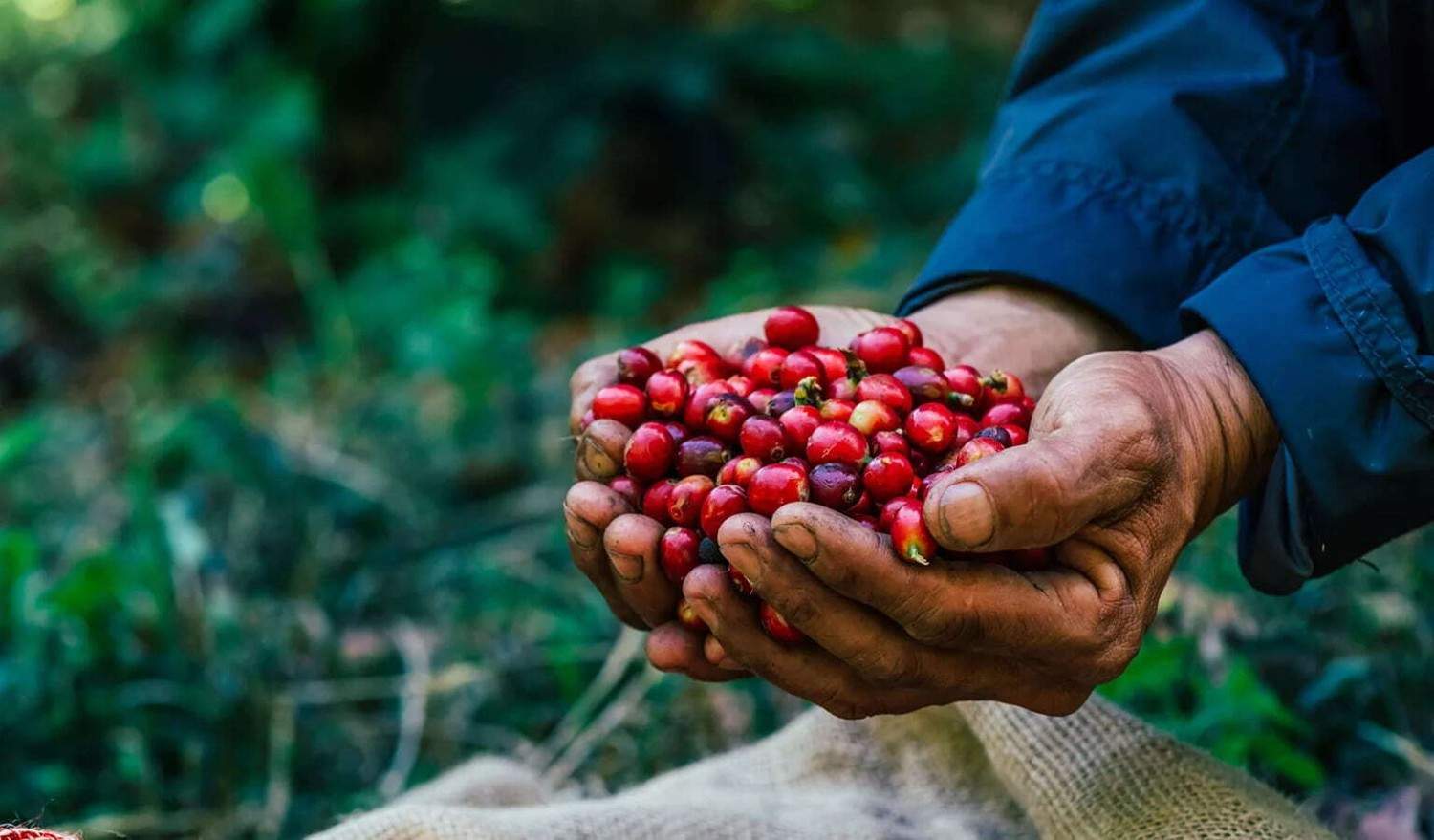
About half the land that grows arabica coffee today may not be able to grow it by 2050.
8 min read
Levi Strauss wrote the first one in 1991. Here is what I look for in a supplier code, four examples I point people to and a template you can adapt.
8 min read